Key takeaways
Google needs crawlable pages, clear titles, helpful content, and internal links.
Pages with impressions but low clicks usually need better titles and meta descriptions.
Thin or repeated paragraphs can reduce trust with readers.
Tables, examples, FAQs, and related tools help users stay longer.
Part of the Web Development Hub
Explore related guides in this topic cluster
What This Guide Helps You Fix
SEO can feel expensive when every tutorial recommends paid tools. The truth is simpler: beginners can learn a lot with free SEO tools.
You can find keyword ideas, check page titles, write meta descriptions, test speed, inspect indexing issues, and improve content structure without paying first.
This guide is for new bloggers, students, freelancers, small business owners, and digital marketers who want a practical SEO toolkit. It will not promise ranking. SEO depends on search demand, content quality, competition, technical health, links, and user satisfaction.
Free SEO Tools at a Glance
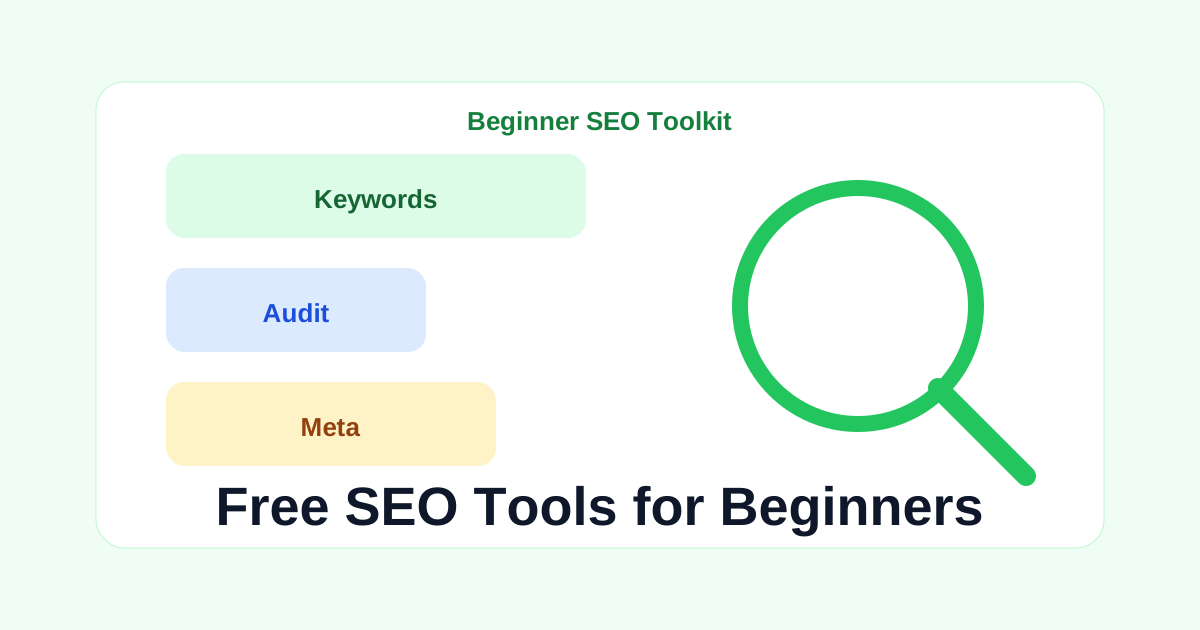
| SEO task | Free tool type | What it helps with |
|---|---|---|
| Keyword research | Low competition keyword finder | Find specific topics beginners can target |
| Content title | Headline analyzer | Improve clarity and click appeal |
| Meta description | Meta description generator | Create better search snippets |
| Website health | SEO audit tool | Find missing basics and technical issues |
| Indexing and clicks | Search Console | Track impressions, clicks, and indexing |
| Speed | Page speed testing | Find slow loading issues |
1. Keyword Research Tools
Keyword research helps you understand what people search before you write. Beginners should avoid very broad terms like "SEO" or "business ideas". Those terms are too competitive and unclear.
Look for long-tail keywords with clear intent. For example, "free SEO tools for beginners" is more specific than "SEO tools". "How to write meta description for blog post" is easier to answer than "meta description".
Try the Low Competition Keyword Finder to create a first list. Then check Google suggestions, People Also Ask questions, and your own Search Console queries if your site already has data.
2. SEO Audit Tools
An SEO audit tool checks whether a page has basic SEO elements: title, meta description, headings, image alt text, links, indexability, and mobile-friendly structure. It does not replace human judgment, but it catches common mistakes.
Use the TechIdea SEO Audit Tool after publishing a page and after updating an old post. Many beginners forget to add internal links, descriptive headings, or useful meta descriptions. These small misses can reduce clicks and engagement.
3. Meta Description Generator
A meta description is the short summary that may appear in search results. Google can rewrite it, but a clear description still helps you frame the page. A good meta description explains the benefit and matches search intent.
Use the Meta Description Generator after your article is finished. Do not write misleading descriptions. If your article is a beginner guide, say that. If it is a comparison, say that. Honest snippets build better user trust.
4. Headline Analyzer
Your title affects both search understanding and clicks. A beginner mistake is writing clever but unclear headlines. A better title usually includes the topic, audience, and value.
Example: "SEO Magic for Websites" is vague. "Free SEO Tools for Beginners: Simple Toolkit Guide" is clearer. Use the Headline Analyzer to test readability and clarity before publishing.
5. Google Search Console
Search Console is one of the most important free SEO tools because it shows real search data for your own site. You can see impressions, clicks, click-through rate, average position, indexed pages, and errors.
A practical beginner workflow is simple. Open Performance, find pages with high impressions and low clicks, then improve title, meta description, opening paragraph, and internal links. Open Indexing reports to check whether important pages are indexed.
6. Page Speed and Mobile Testing
People leave slow pages quickly, especially on mobile. Use free speed tools to identify large images, slow scripts, and layout issues. Speed alone does not guarantee ranking, but poor speed can hurt user experience.
Compress images, use descriptive alt text, avoid too many heavy widgets, and keep ads from blocking the main content. This is also important for AdSense safety and mobile readability.
7. Rich Results and Schema Testing
Structured data helps search engines understand page types such as FAQ, Article, Product, or HowTo. Beginners should keep schema simple and accurate. Do not add FAQ schema for questions that are not visible on the page.
After adding schema, test it with an official rich results testing tool. The goal is not to trick search engines. The goal is to describe your page honestly.
A Simple Beginner SEO Workflow
- Find a specific topic using keyword ideas.
- Check search intent by looking at current results.
- Create a helpful outline with H2 and H3 sections.
- Write the article in simple human language.
- Add internal links to related tools and guides.
- Write a clear meta title and description.
- Audit the page and fix missing basics.
- Submit or inspect the page in Search Console.
Example: Improving One Blog Post with Free Tools
Imagine you wrote an article called "Business Ideas". It is too broad. A beginner SEO workflow can make it better.
First, use a keyword idea tool and find a more specific angle, such as "low investment business ideas for students".
Next, check search results and notice that users want examples, cost estimates, skills needed, and risks.
Now update the title to match the intent. Use a headline tool to make it clear, such as "Low Investment Business Ideas for Students: Practical Guide".
Add H2 sections for online ideas, local ideas, skills, costs, and mistakes. Add original examples instead of copying generic lists.
Then write a meta description that explains the value in simple language.
Add internal links to related tools such as resume builder, invoice maker, or business calculators if they fit naturally.
After publishing, use an audit tool and Search Console to see whether the page is indexed and getting impressions.
Monthly SEO Routine for Beginners
SEO becomes easier when you make it a routine. Once a month, review your top pages in Search Console. Find pages with impressions but low clicks.
Improve their titles and meta descriptions. Find pages with good clicks but weak engagement. Improve the introduction, examples, and internal links.
Also check old articles. Add fresh examples, remove outdated claims, repair broken links, and improve images. This is safer and often faster than publishing endless new content without improving existing pages.
Common Mistakes Beginners Make
- Using tools without understanding search intent.
- Repeating the same keyword too many times.
- Publishing thin articles that do not solve the problem.
- Ignoring mobile layout and image sizes.
- Forgetting internal links from older related articles.
Internal Linking Suggestions
Use Low Competition Keyword Finder in the keyword section, SEO Audit Tool in the audit section, Meta Description Generator in the snippet section, and Headline Analyzer in the title section. Link to TechIdea Blog at the end for more learning.
External References to Check
Use official Google Search Central, Search Console Help, PageSpeed Insights, and Rich Results Test documentation for technical details. These sources are safer than outdated SEO myths.
Final Recommendation
Free SEO tools are enough to build good beginner habits. The important thing is not the number of tools you use, but the order in which you use them.
Start with search intent, then keyword ideas, then a helpful outline, then on-page checks, then Search Console review after publishing.
Do not chase every SEO score. A page can have a high score and still be unhelpful. Read your article like a real visitor. If the answer is clear, examples are practical, links are useful, and the page works well on mobile, you are moving in the right direction.
Soft CTA
Try TechIdea's free SEO tools before publishing your next article. A few minutes of keyword, title, meta, and audit checks can make your content clearer for both readers and search engines.
Simple process
What to do next
Follow these steps in order. Keep each change small, check the result, then move to the next one.
Check indexing first
Open Google Search Console and confirm the page can be crawled, indexed, and found through your sitemap.
Try SEO Audit ToolImprove the search snippet
Rewrite the title and meta description so the benefit is clear before users click.
Check SEO titleAdd useful examples
Show before and after examples, common mistakes, and simple explanations readers can apply today.
Link related pages
Connect the article to tools, guides, courses, and related posts so Google understands the topic cluster.
Find keyword ideasPublishing checklist
- The title clearly tells readers what they will learn.
- The meta description is specific and written for clicks.
- The content has original examples, not only generic advice.
- Related tools, posts, and learning pages are linked naturally.
- Tables, FAQs, images, and buttons work well on mobile.
Mistakes to avoid
- - Focusing only on backlinks while titles, content, and internal links are weak.
- - Stuffing keywords instead of answering the search intent.
- - Ignoring Search Console impressions and CTR data.
- - Writing the same introduction on many posts instead of explaining the real problem.
- - Publishing long paragraphs that are hard to read on mobile.
- - Adding too many CTAs before the reader gets a useful answer.
Up Next in Web Development
Keep Reading
Related tools
Related courses
SEO Course
Learn search basics, technical SEO, and page structure.
Open toolPractice Quizzes
Test HTML, CSS, and JavaScript basics with instant feedback.
Open toolBest Tools for Bloggers
See useful tools for content planning and publishing.
Open toolBrowse Courses
Explore structured learning paths on TechIdea.
Open toolRelated posts
Best Free SEO Tools for Bloggers
Complete guide to growing your site for free.
Read guideHow to Get Indexed Faster
Practical checklist for Google discovery in 2026.
Read guideAdSense Approval Guide
Prepare your new website for monetization.
Read guideStudent Tools Hub
Top resources for students and learners.
Read guideFrequently asked questions
Are free SEO tools enough for beginners?
Yes. Free SEO tools are enough to learn keyword research, on-page SEO, speed checks, indexing, and basic content improvement.
Do SEO tools guarantee ranking?
No. SEO tools help you make better decisions, but ranking depends on content quality, competition, links, technical health, and user satisfaction.
Which free SEO tool should I use first?
Start with keyword research and Google Search Console. Then use headline, meta description, and SEO audit tools to improve individual pages.
How often should I audit my website?
Audit important pages after publishing, after major edits, and at least monthly for pages that bring traffic or leads.
Is keyword stuffing useful for SEO?
No. Keyword stuffing hurts readability and quality. Use your main keyword naturally with related terms and clear explanations.
Editorial Integrity
Fact CheckedWritten By
Pradeep RayWritten by Pradeep Ray, founder of TechIdea. He writes practical guides on AI tools, SEO, blogging, online safety, business automation, and digital growth. View full profile.
Reviewed By
TechIdea Editorial Panel
Technical accuracy verified by our expert engineering panel.
Why Trust TechIdea?
Last updated: May 17, 2026
Share or save this article
Send it to someone who can use the checklist.
Was this helpful?
Comments
Thoughtful comments are welcome. New comments stay pending until approved by admin.